You Had to Be There (But You Weren't)
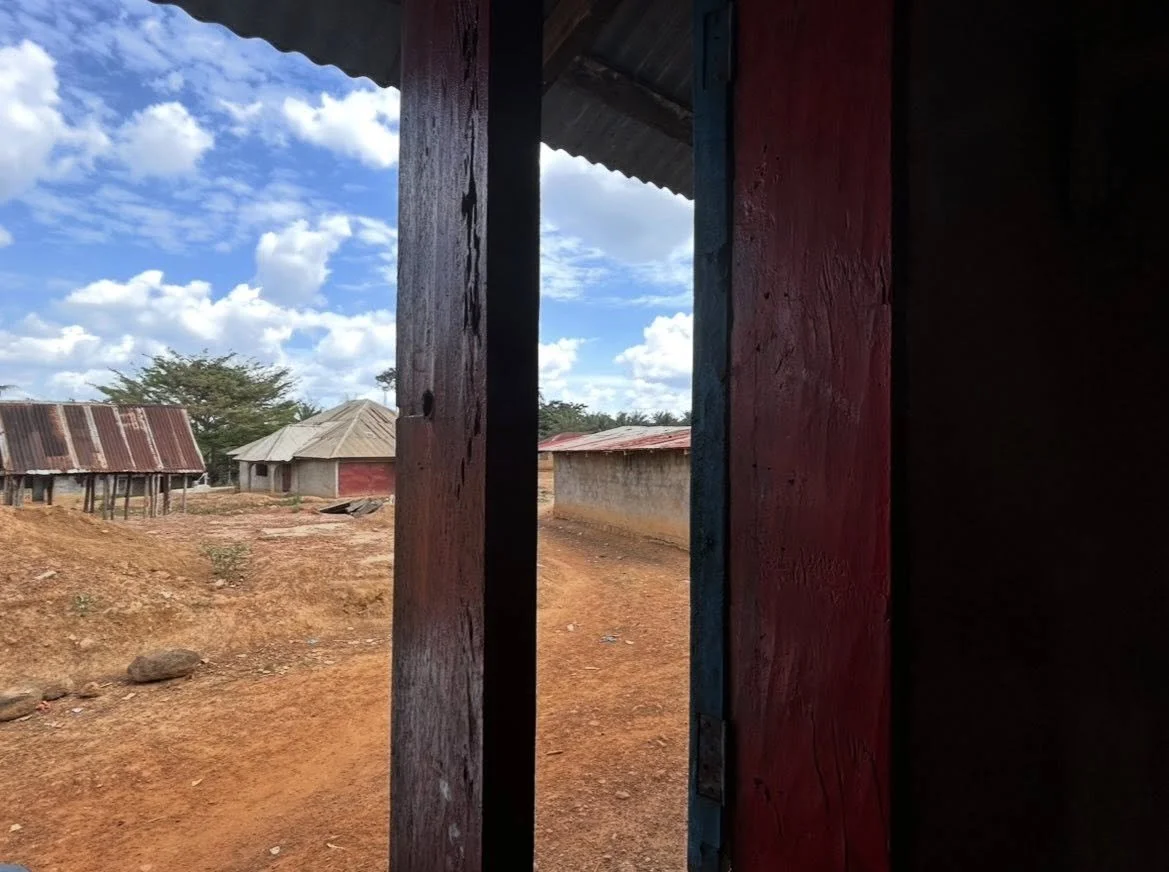
I never come home from Africa alone.
I come home carrying stories. Not just stories. Histories. Experiences. Faces.
There is a burden of responsibility, a weight of which I am acutely aware, that doesn’t translate neatly into conversation. It’s a quiet, but persistent disconnect.
People cannot fully understand what they have not experienced. The rational part of me accepts that. It’s not a failure of empathy; it’s a limitation of being human. We can do our best to overlap our experiences in an effort to find commonalities, something similar to anchor our emotional responses to, but even then, we will never quite find a perfect point of ‘getting it’.
There is another part of me — less tidy, more honest, that doesn’t settle so easily. The part of me still holding what I saw, and heard, and felt, and feel. My spirit is restless, carrying this tension between the two sides of this experience gap. Why aren’t you asking better questions? Why aren’t you pressing in just a little more? Why does this feel so surface-level when it is anything but surface-level to me? What do I do with all of this?
I’ve been here before. When my sister had cancer, people showed up with kindness. They understood cancer as a concept. Cancer is serious. Cancer is hard. Cancer is bad. But they did not understand what it felt like to live inside of it. The constant recalibration of life around uncertainty. The exhaustion of carrying that reality while everything around you continues as though nothing has changed. Every moment. Every day. For years. As a child, I knew the experience gap. They just didn’t get it. How could they? And yet, when they didn’t respond to my frantic attempts to survive my reality with patience or understanding, anger bubbled to the surface. Why didn’t they try to understand?
You learn very quickly how to sanitize your story. You package it into easy-to-digest pieces. When a question is asked, and your lived experience wells up inside of your throat, screaming to be let out, but instead…you swallow it back down. You hold it there. You pause for a moment to let your body reset as you smile and share that neat, clean, palatable message packaged appropriately for general audience consumption. Packaged for people who will never get it.
That internal tension. Knowing that full understanding wasn’t possible, yet still wishing, sometimes desperately, that someone, anyone, would try to get closer. That someone would step into the heaviness with me and try to understand. That they would ask different questions. That I wouldn’t feel so alone in something that so many people were aware of, but so few truly grasped.
I find myself holding these two truths at once. The gap is real. And the weight of carrying something that does not easily translate is real, too.
This is part of the human experience. People walk through grief, trauma, illness, moments that reshape them in permanent ways, and then they attempt to articulate those experiences to others who simply do not have the same reference points. We want to be seen. We need to feel understood; known by someone. It isn’t a lack of care that creates the disconnect. More often, it is the absence of shared experience. Without that, there is only so far understanding can go.
I’ve started to call this the experience gap — the space between what someone has lived and what someone else can meaningfully understand. And I am coming to terms with the fact that this gap cannot be fully closed. No matter how carefully we choose our words, no matter how many details we masterfully weave into the narratives of our experiences, there will always be some distance.
Before every trip to Africa, I ask God to open my heart and mind to what He needs me to learn. My job bridges a chasm of understanding. Here and there. There and here. This space where I am standing is isolating. On one side, I am listening to and carrying stories that are not mine. I am acutely aware of the fact that I am the one who is disconnected by my own lack of experience. Because of that I am constantly wrestling, seeking, and searching. Am I asking the right questions? Do they see that I am trying to understand? Can they feel how much I care? How do I transfer these sacred stories, stories that aren’t mine, to an audience even further removed from those experiences.
This realization has been both clarifying, and at times, deeply unsettling. I’ve wanted to believe that if I could just find the right language, the right storytelling model, if I could just do my job better— understanding would follow. That expectation places a burden on storytelling that it was never meant to carry.
So I am reframing the goal.
Perhaps it is not full understanding that we are after, but movement.
Not: Now you get it.
But: Now you are closer than you were before.
This shift changes how I think about telling stories, about communicating experiences that others have not lived. It asks less of the listener, but it also asks something different of the storyteller. Not to transfer the experience, that is not possible, but to build a bridge for connection. One that is honest. Specific. Grounded in real moments. One that allows someone to step toward the experience, even if they cannot fully step into it.
I wish that I could say that this new approach has settled my spirit — that I feel better, content, at peace. I don’t. A part of me resists this whole idea. I wish people could see what I have seen and heard as clearly as I do, feel it as deeply, and carry it with the same weight. That part has not gone away. I’m not sure it ever will, and I am honestly not sure that I want to be totally relieved of this discomfort. I want these things to change me.
There’s also something deeper at work in all of this. In Romans, we’re told that suffering produces perseverance, and perseverance, character, and character…hope. We’re also reminded that God comforts us in our troubles so that we can comfort others with the same comfort we’ve received. That doesn’t make the experience easier, and it doesn’t resolve the tension of carrying things others don’t understand. But it does give it purpose. The very things that feel isolating are often the same places God uses to draw people closer to one another — and to Him — through presence, through empathy, through a willingness to step toward someone else’s reality.
We need to keep sharing our stories. Not because they will ever produce complete understanding — they won’t. We need to keep sharing because they make movement possible. A shared step toward one another, toward connection, away from islands of isolation. A narrowing of the distance, even if it’s small. That movement matters more than we often realize. It can shift people out of indifference and into empathy, out of distance and into presence.
Full understanding may never happen.
But connection still can.
And sometimes, that is what matters most.
All views expressed here are my own and do not represent the opinions of Lutheran Bible Translators.